


Dubai chocolate with kataifi: filling, recipe and tips for professionals
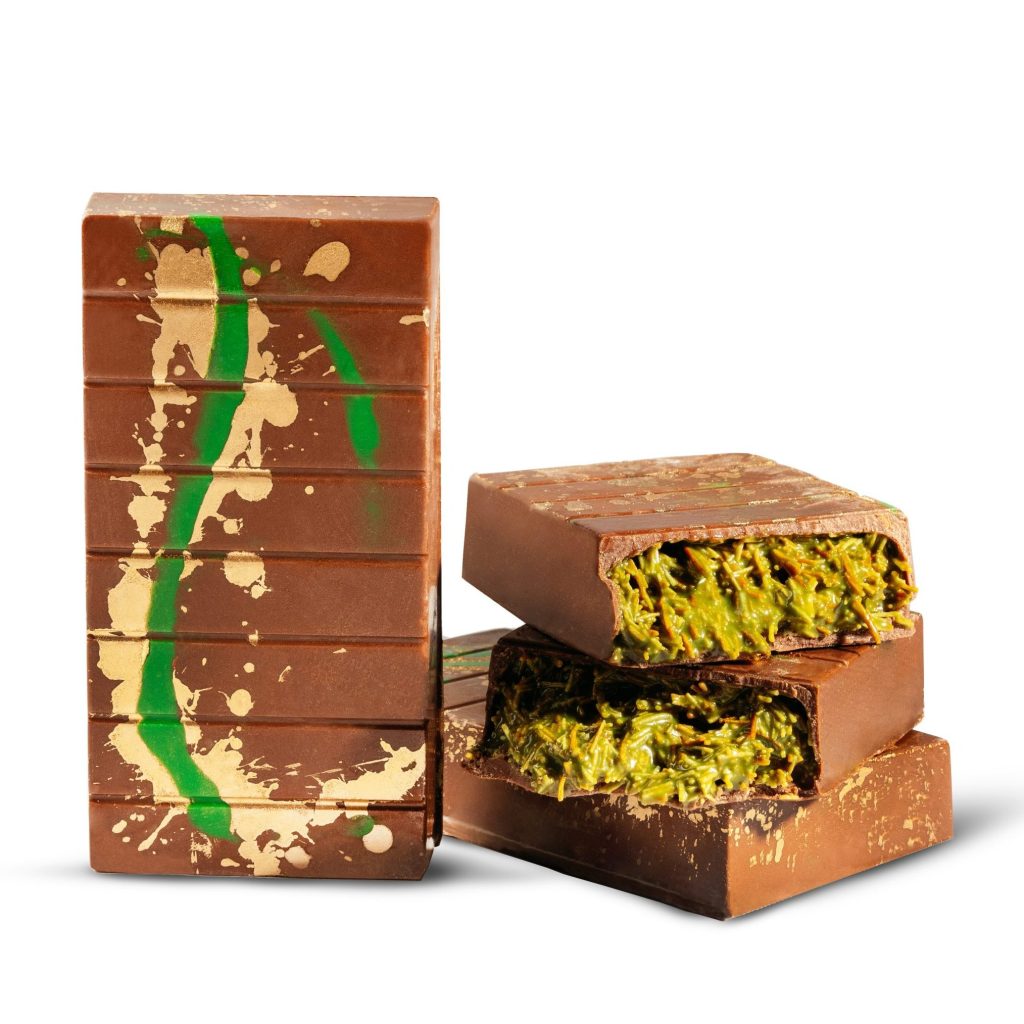
Dubai chocolate is a thick chocolate bar filled with pistachio cream and crispy strands of toasted kataifi dough. Around 2024 it spread through social media, and soon bakeries and home cooks across Europe made their own versions. The recipe is simple, but the result depends on a few details: how the kataifi is toasted, how much fat and water the filling contains, and how the chocolate shell is built.
What is Dubai chocolate?
In its typical form, Dubai chocolate is a moulded bar with a shell of milk or dark chocolate and a generous green filling. When you break the bar, you see the pistachio cream and hear the crunch of the golden kataifi inside. There is no single official recipe, and variations are many.
The ingredient that makes the bar recognisable is kataifi, also known as kadayif or “angel hair” dough: very fine strands of dough from the Ottoman, Middle Eastern and Greek pastry tradition. If you want to know more about the dough itself, read our guide What is kataifi.
Why Dubai chocolate needs kataifi
Kataifi strands are thin, so after toasting they become light and brittle, not hard. They give a clean crunch that stays distinct from the cream around them. Toasting also develops a nutty, slightly caramel flavour that goes well with pistachio. It is also less sweet than crushed biscuits, so the pistachio stays in the foreground.
The crunch lasts only if the strands stay dry. Water from the filling or from condensation softens them over time.
How to make Dubai chocolate kataifi filling at home
Ingredients for 2–3 large bars
- 100 g kataifi dough (raw, or ready roasted kataifi)
- 20–30 g unsalted butter (only if you toast raw dough)
- 100–120 g pistachio cream
- 1–2 tablespoons tahini (optional)
- 300–400 g milk or dark chocolate
Step by step
- Toast the kataifi. If you use raw dough, cut or break the strands into pieces of 1–2 cm. Melt the butter in a wide pan, add the kataifi and stir constantly over medium heat until it is evenly golden and crisp, usually 8–12 minutes. If you use roasted kataifi, skip this step.
- Let it cool completely. Spread the strands on a tray. Warm kataifi mixed into cream turns soft faster.
- Mix the filling. Combine the cooled kataifi with the pistachio cream, and add tahini if you like a less sweet, more roasted note. A practical starting point is roughly equal weights of cream and kataifi. More cream gives a softer, creamier filling; more kataifi gives a stronger crunch.
- Prepare the chocolate. For a glossy bar with a clean snap, temper the chocolate. Simply melted chocolate also works but stays softer.
- Build the shell. Pour chocolate into a bar mould, turn the mould to coat the walls, tip out the excess and let it set for a few minutes in the fridge.
- Fill and close. Press the filling into the shell, leaving 2–3 mm free at the top. Cover with chocolate, scrape the surface flat and let the bar set in the fridge for 30–60 minutes before you unmould it.
Tips for chocolatiers and pastry shops
In professional production the same recipe has to give the same result every day, and the bars have to keep their texture on the shelf. These points help:
- Use roasted kataifi for consistency. Toasting in-house takes time, and colour and moisture change from batch to batch. Ready roasted kataifi has a uniform colour and dryness and keeps for 24 months at +5…+25 °C away from direct sunlight, so you can stock it without a freezer.
- Keep the filling fat-based and low in water. Nut creams, nut pastes, cocoa butter and tahini protect the crunch. Avoid ingredients that contain water, such as fresh cream, syrups or fruit purées, in the kataifi layer.
- Control the shell. Work with properly tempered chocolate and a shell thick enough to hold the filling without cracking when the bar is broken; 2–3 mm is a common choice.
- Prepare in batches. Mix the filling in quantities you can use within one production run, keep it covered at a stable room temperature, and fill the shells while the mass is still easy to spread.
- Store finished bars cool and dry. Wrap them tightly and keep them away from humidity and temperature swings.
- Plan your pack sizes. Our kataifi comes in 1, 2, 5, 10 and 20 kg packs; 5–20 kg packs are practical for regular production. For your own brand, private label is possible from 1 tonne.
Which of our products fit
For Dubai chocolate from Kataifi Factory EU, these products are relevant:
- Roasted kataifi: ready to mix into the filling, no toasting needed, 24 months shelf life.
- Pistachio and nut creams: for example a cream with 16% pistachio, as a base for the filling.
- Dubai chocolate kits and ready filling: including ready Dubai filling (80/20 ratio), made to order.
- Gluten-free kataifi: produced on a separate gluten-free line, for a gluten-free version of the bar. More in our guide to gluten-free kataifi.
Regular kataifi contains gluten (wheat) and may contain traces of milk, nuts and eggs. For volume prices, pallet delivery and private label, see our wholesale page. We deliver across the EU without customs procedures. For questions, write to sale@kataifi-factory.eu or call +48 576 513 845 (also WhatsApp).
Frequently asked questions
Can I use raw kataifi instead of roasted?
Yes. Cut it into short pieces and toast it in butter over medium heat until golden and crisp, then let it cool completely before mixing it with the cream. Roasted kataifi saves this step and gives a more uniform result.
Why does the filling lose its crunch?
Usually because of moisture. Ingredients that contain water, warm kataifi mixed into the cream, or condensation during storage soften the strands. Keep the filling fat-based and store the bars cool and dry.
What ratio of pistachio cream to kataifi should I use?
Roughly equal weights are a good starting point. Add more cream for a softer filling or more kataifi for a stronger crunch, then adjust to your chocolate and your mould.
Can Dubai chocolate be made gluten-free?
Yes, if all ingredients are gluten-free. Our gluten-free kataifi is produced on a separate gluten-free line; lab test results and declarations are available on request.