


What is kataifi? Kataifi dough, kataifi vs phyllo and how to use it
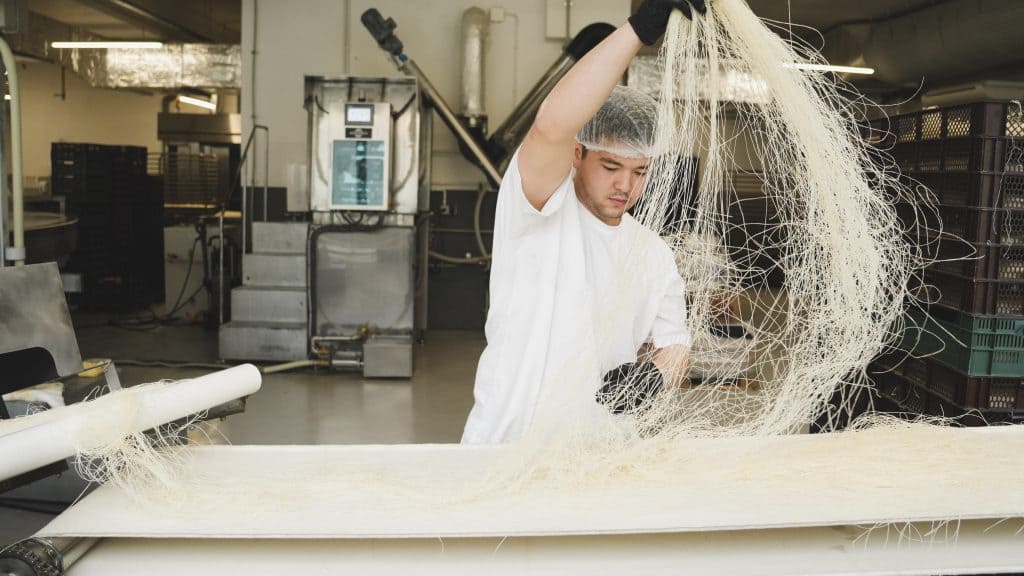
Kataifi is a dough made of very fine, thread-like strands. It looks like angel hair pasta but behaves like pastry: coated with butter and baked, it turns golden and crisp. Bakers and chefs use it for syrup-soaked desserts, crunchy nests, coatings for seafood and, more recently, as the crunchy layer inside Dubai chocolate. This guide explains what kataifi is, where it comes from, how it differs from phyllo and how to store and use it correctly.
What is kataifi?
Kataifi dough is made from a thin batter of flour and water. The batter is poured through fine nozzles onto a hot, rotating plate, where it sets within seconds into long, thin strands. The strands are gathered into bundles and packed while still soft. The result is not a noodle and not a sheet of pastry, but a loose mass of threads that you can pull apart, shape, roll or press into a tin.
On its own, raw kataifi tastes neutral. Its character comes from fat and heat: butter or ghee makes the strands rich and crisp, and the oven gives them colour and crunch.
Where kataifi comes from
Shredded dough of this kind belongs to the shared pastry tradition of the Middle East and the former Ottoman world. It has been used for centuries in Turkish, Greek, Levantine and Arab kitchens, usually in desserts with nuts, cheese or cream and a sugar syrup. Each region gave the dough its own name, which is why it appears under several labels today.
Names in different countries
- Kataifi (also kadaifi) – the Greek name and the most common term in English-speaking markets.
- Kadayıf / tel kadayıf – the Turkish name; “tel” means wire or thread and refers to the strands.
- Kadaïf – the usual name in France and in North African cooking.
- Engelshaar or Teigfäden – descriptive names used in German-speaking countries.
- Kunafa or knafeh dough – the name used in Arabic-speaking countries, where the dough is the base of the famous cheese dessert.
Kataifi vs phyllo: strands versus sheets
People often ask about kataifi vs phyllo because both are thin, both need fat and both bake to a golden crunch. The difference is in the form:
- Shape: phyllo (filo) comes as paper-thin sheets that you layer; kataifi comes as loose strands that you pull apart and wrap.
- Texture: baked phyllo gives flat, flaky layers that shatter; baked kataifi gives an airy, nest-like crunch with many small crisp threads.
- Uses: phyllo is the choice for baklava, spanakopita or strudel-style pastries; kataifi works best for nests, rolls, coatings for prawns or cheese, kunefe and toppings.
Types of kataifi dough
Raw kataifi, chilled or frozen
This is the classic product for baking. Raw kataifi is soft and flexible, so you can shape it. We produce it chilled or frozen, made to order, in packs of 1, 2, 5, 10 and 20 kg.
Roasted kataifi
Roasted kataifi is already toasted to a golden colour and ready to use. It is the standard ingredient for Dubai chocolate fillings, for mixing with pistachio cream and for crunchy toppings on cakes, ice cream or bowls.
Gluten-free kataifi
Gluten-free kataifi is produced on a separate gluten-free line. Lab tests and declarations are available on request. You can read more in our guide to gluten-free kataifi.
How to store kataifi
Storage depends on the type. These are the shelf-life figures for our products:
- Raw kataifi, chilled: 1 month at 0…+3 °C.
- Raw kataifi, frozen: 12 months at −18 °C.
- Roasted kataifi: 24 months at +5…+25 °C, away from direct sunlight.
- Gluten-free kataifi: 12 months in a cool, dry place.
Once a pack of raw dough is open, wrap the rest tightly in film and use it soon. Dry strands break instead of bending.
How to use kataifi dough
- Thaw slowly. Move frozen kataifi to the fridge and let it thaw in the closed pack, ideally overnight. Do not use a microwave or warm water.
- Loosen the strands. Open the pack and gently pull the bundle apart with your fingers so the threads separate and become airy.
- Add fat. Coat the strands evenly with melted butter or ghee. Every thread should be lightly covered; dry spots stay pale and hard.
- Keep it covered. While you work, cover the dough you are not using with film or a slightly damp cloth so it does not dry out.
- Bake. Bake at about 170–180 °C until evenly golden. Time depends on the dish and the size of the pieces.
Savoury ideas
Wrap king prawns in buttered kataifi and bake them until crisp. Wrap feta or halloumi, drizzle with honey and sesame. Use small kataifi nests as a base for smoked salmon or a soft-boiled egg.
Sweet ideas
Make kunefe: two layers of buttered kataifi with a soft, stretchy cheese in between, baked and soaked with syrup. Bake Greek-style kataifi rolls with walnuts and cinnamon, or ekmek kataifi with custard and whipped cream. Mix roasted kataifi with pistachio cream to fill Dubai chocolate.
Where to buy kataifi
Kataifi Factory EU produces kataifi dough in Poland and delivers across Europe by courier or on pallets, without customs within the EU. You can order from 1 kg in our shop. For bakeries, restaurants and distributors we offer bulk packs of 100, 200, 250 and 400/500 kg, and wholesale and private label production from 1 tonne. Our capacity is up to 100 tonnes of dough per month.
The regular dough contains gluten (wheat) and may contain traces of milk, nuts and eggs. For prices and lead times, write to sale@kataifi-factory.eu or call or WhatsApp +48 576 513 845, or use our contact page.
Frequently asked questions
Is kataifi the same as phyllo?
No. Both are thin wheat doughs, but phyllo comes in sheets and kataifi comes in fine strands. Phyllo bakes into flat flaky layers; kataifi bakes into an airy, crunchy nest.
Do I need to cook kataifi before eating it?
Raw kataifi must be baked or fried before eating. Roasted kataifi is already toasted and can be used straight from the pack, for example in Dubai chocolate or as a topping.
How long does kataifi keep?
Raw chilled kataifi keeps 1 month at 0…+3 °C, raw frozen kataifi 12 months at −18 °C, roasted kataifi 24 months at +5…+25 °C and gluten-free kataifi 12 months in a cool, dry place.
What is the minimum order?
You can order from 1 kg. Private label production starts from 1 tonne.